
From Child Care Desert to On-Campus School: An Employer’s Solution for Working Parents
Reading Time: 3 minutes
For working parents in the small community of Platteville, Wisconsin, child care options are scarce. After listening to concerned leaders and employees talk about the impact on recruitment and retention, non-profit Southwest Health, the primary medical facility in the area, decided to do something about it.
“Many employees have had to piece together child care, or [travel] to a different city,” says Caiti Droessler, chief human resources officer at Southwest Health (SWH). “[And] we’ve had people say, ‘I’m having a baby, I can’t come back to work,’ or apply for a job, and then say, ‘I can’t move into the area because I can’t find child care.’ As one of the largest employers in the area, this is something we felt we needed to take the lead on.”
SWH has spent the last six years building its own on-campus child care center — not an easy task for any business. The project started around 2022; corporate child care center company New Horizon Academy was chosen as a partner, and SWH secured a grant from the USDA, as well as donations and contributions from the Kaiser Family Foundation and Wisconsin’s governor and senators to fund the project.
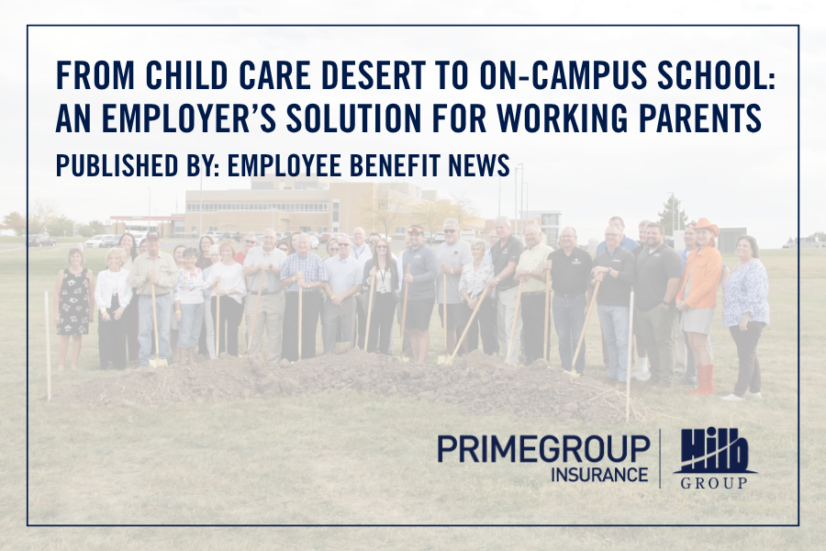
The groundbreaking took place late last year, and the Southwest Health School will open its doors this fall to accommodate 140 children aged infant to kindergarten. But unlike most corporate child care centers which cater only to employees, this one will open any spots not used by SWH workers to other parents in the community. Because of the funding, all parents will be eligible for a discounted tuition rate.
“It is truly going to benefit us as an employer and our employees … but what a great resource for our community [as well],” she says. “If [our employees] know [their] child’s safe and has quality care, their focus and their attention is here at work. It’s hard to find the money, but definitely worth it in the end.”
Giving time and peace of mind
For Dayna Dailey, SWH’s director of patient financial services, the new center means finally having a reliable child care option minutes from home for her one-year-old son. When she first found out she was pregnant, she joined waitlists at four centers, one of which was six pages long.
The daily commute to a neighboring town where her son is currently enrolled is around 40 minutes. Once he starts at SWH’s school, Dailey will have this time back in her day and even be able to visit him during lunch. The peace of mind that comes from knowing her son will be in a vetted, close location is tremendous, she says.
“When I found out that Southwest Health was going to open up a child care center, I knew that they wouldn’t choose an organization [to run it] unless it was going to be the same quality of care they provide their patients,” she says.
All of New Horizon Academy’s centers are nationally accredited and staffed by trained teachers, with curriculum beginning for children at six weeks, says Kelena Bonnell, the company’s Iowa area director. When employers offer their workforce access to this kind of care and education, they are helping with one of the biggest decisions a young family has to make, she says.
Dailey points out that the center will create the opportunity for her son to establish relationships with other children in the community, and she is looking forward to connecting with fellow parents within the organization as well as the town.
Knowing that child care has been an issue for many in the area, and that her company has worked so hard to help, fills Dailey with appreciation.
“It just makes you feel valued as an employee, because they’re actually listening and involved in the community,” she says. “It makes me respect my employer more, because it’s not going in one ear and out the other.”
Droessler echoes the benefits that come when a business demonstrates local support.
“We do many things within the community that don’t always support our bottom dollar, just because we know we should,” she says. “This is not a health care service, but it was one of those things that we recognized as a community that we needed, [and] that supports our mission of taking care of Southwest Wisconsin.”
Original Article, click here.